



multimedia » Law/Politics/Religion
The Queernesses of Jewish Heresy
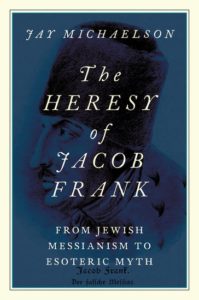
From the 17th to 19th centuries, European Judaism witnessed an eruption of ecstasy and eros in a series of heretical and quasi-heretical movements, beginning with the failed messiahs Sabbetai Zevi (1626-76) and Jacob Frank (1726-1791), and continuing through the ‘domestication’ of Sabbateanism by the Hasidism of the Baal Shem Tov (1698-1760) and his followers. These movements offered intensified spiritual experiences, complete with sublimated and non-sublimated erotic expression. They were also, in various ways, queer, including the ambiguously gendered Sabbetai, the liberation of sexuality as harbinger of the messianic age, the leadership and power of women in Sabbatean and Frankist communities, the female messiah in Frank’s imaginaire, and sexualized worship and homoerotic/homosocial bonds among the Hasidim.
Does Donald Trump Bear Responsibility for Pittsburgh?
CNN's Out Front, with Jake Tapper, discusses the aftermath of the Pittsburgh massacre.
Understanding the Gaza-Israel Border Violence
https://www.facebook.com/thedailybeast/videos/10156573477304203/
Is EPA Chief Scott Pruitt “Too Corrupt to Fire”? | MSNBC
Jay Michaelson joins MSNBC's Katy Tur to discuss the scandals plaguing the EPA administrator.
Warren for VP? | CNN
Should Hillary Clinton choose Elizabeth Warren as her running mate?
Content currently unavailable
What’s Changed Since The First Religious Liberty Law Was Passed In 1993?
Jay participates in a National Public Radio piece on the Religious Freedom Restoration Act.
Queer Theology & Social Transformation | Pacific School of Religion
Queer theology holds forth the promise of reinventing theological discourse in the light of LGBTQ experience, queer theory, and a hermeneutic informed by marginalized voices and outsider discourse. But how does the queer theological enterprise intersect with queer activism? What are the possibilities, and perils, of translating between theology and activist practice? What forms of political discourse are informed by queer theology, and what are undermined?